|
How To Transplant Potted Trees, Shrubs, And Bushes
|
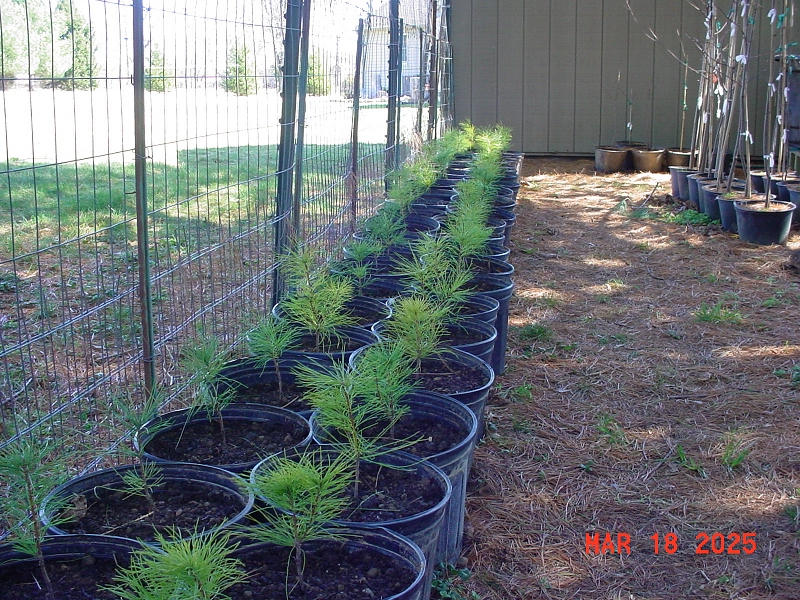
A new young potted tree, bush, or shrub does not require immediate transplant. The plant can remain in the container until you are ready to transplant. Place the plant where the plant can receive sufficient sunlight. Do water the plant regularly especially on the hot and dry days. A plant in a container above ground will require water more often than a plant in the ground. Also, periodically rotate the container to face the sun to encourage the new root growth to grow more evenly.
- Very important first step before you dig and plant: determine the exact location for your new plant where sufficient sunlight is available. Place the plant or stick a flag or pole in this spot to mark the spot. Be patient. During the day or even days ahead, notice this location from different angles (house window, driveway, porch, yard, etc.) and adjust the location as needed.
- Dig a hole a few inches wider and deeper than the container size. The hole width can be up to a foot wider (6 inches each side) than the container for optimum planting, although not necessary. The top of the plant ball must be planted level with the ground.
- While the plant is still in the container, place the plant and container into the hole to make sure the width and depth is exactly right. Adjust the hole width and depth as needed. Then, remove the plant from the container by placing the bottom of the container on your left knee and pulling down on the sides of the container until you feel the plant ball is loose enough to be carefully removed.
- Carefully remove the plant from the container by pulling the plant straight up or laying the container on it's side and wiggling the plant out of the container. Good idea to lightly rough up the outside and bottom of the ball to loosen some compacted roots. You might also want to remove some roots that are tangled or reaching upward and maybe even spread out some of the roots.
- Place the plant into the center of the hole making sure the top of the plant ball is level to the ground, adjust the depth as necessary. Plant should be firmly placed into the hole.
- Back fill the space around the plant with the same or nutrient treated soil, but not fertilizer. Apply medium pressure to the loose soil so the soil will hold the plant firmly into and upright position.
- Water the plant generously and allow the water to drain or settle, apply more soil around the plant if needed.
- Lightly water the plant daily or every other day or so depending on the weather conditions. To avoid root rot, do not over water the plant continuously. Allow the water to soak into the ground where the roots can somewhat dry out at times before adding more water.
- After one year in the ground, the plant can be lightly fertilized as desired. Never over fertilize any plant. Miracle grow mixed with water is a good choice for a deciduous tree or bush fertilizer. Evergreen-Tone and Holly-Tone is a good choice for evergreen tree fertilizer.
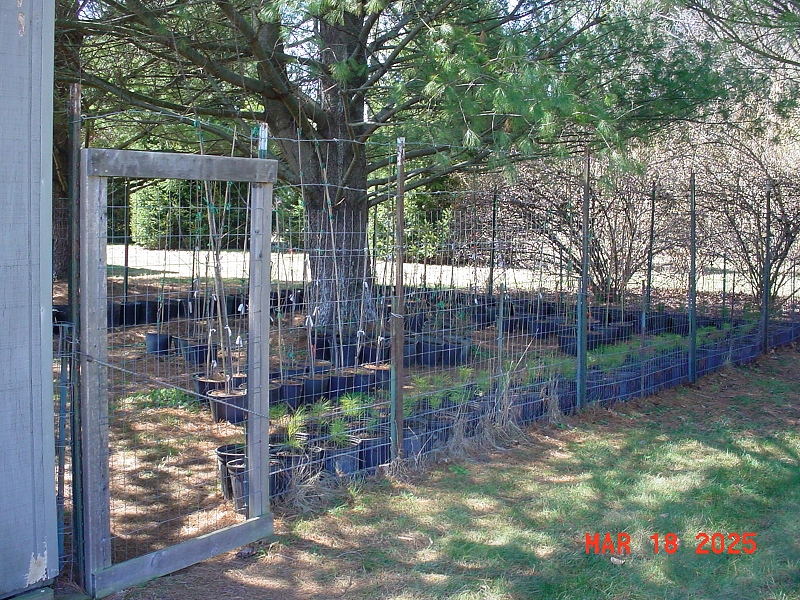
- If you experience deer damage in your area, you should install a wire fence around the plant. At least one foot space surrounding the plant and two feet higher than the plant. A four foot or three foot wire fence and two or three light-duty metal fence u-post should be sufficient for a few years or more, if needed. Wire fence and u-post are available at most hardware type stores.
- For deciduous trees, using a plastic tube type tree guard for several years could be a tree saver. Plastic tree tubes or guards can be found on the internet or at some landscape supplies stores. And, we sell tree guards and trunk guards as well.
|
|
How To Fertilize Potted Trees, Shrubs And Bushes
|
Fertilizing Plants
It is generally best to wait at least a few weeks after transplanting before fertilizing a plant to allow the plant to establish itself and recover from the shock of being moved. A common recommendation is to wait about 3-4 weeks after transplanting before fertilizing a plant.
Why wait? Transplanting can damage or disrupt the plant's roots, making it difficult for them to absorb nutrients immediately. Fertilizing too soon can cause stress and potentially harm the plant.
What to do in the meantime? Focus on consistent watering, providing adequate sunlight, and monitoring for signs of stress or nutrient deficiencies.
When to start fertilizing? It is ok to start fertilizing a plant after the plant has shown signs of establishing, such as new growth or healthy green leaves, then you can begin or consider fertilizing the plant.
What type of fertilizer to use? A starter fertilizer or a balanced fertilizer with a balanced mix of nitrogen, phosphorus, and potassium (NPK). NPK ratio (e.g., 10-10-10) is a good choice for newly transplanted plants.
How to fertilize: You can apply liquid fertilizer (Miracle-Gro Liquid Plant Food) by mixing the fertilizer with water and applying it to the soil around the plant or by using a slow-release fertilizer granules like Osmocote.
Fertilizing Evergreen Trees And Acid Loving Plants
Fertilize evergreen trees and acid-loving plants (norway spruce, white pine, green giant, ferns, blueberry, raspberry, strawberry, magnolia, dogwood, japanese maple and other acid loving plants like azaleas, rhododendrons, camellias) in early spring before new growth or late summer, avoiding late fall to prevent winter injury. Use acidic fertilizer formulated for these plants to maintain a pH of 5.0 to 7.0, ensuring high nitrogen and iron for foliage.
Newly planted trees typically do not need any fertilizer during the first few years, as their roots are still recovering. Thereafter, some fertilizer can be beneficial, but is not necessary.
- Espoma Organic Holly-Tone 4-3-4 is a granular fertilizer with minor acidifying properties that feeds acid loving plants with nutrients and lowers pH levels. We recommend Espoma Organic Holly-Tone.
- Espoma Organic Soil Acidifier is a granular soil amendment that lowers soil pH without adding nutrients.
- Osmocote Smart-Release Plant Food Plus Outdoor & Indoor is a granular fertilizer that contains 11 essential nutrients and feeds live plants up to 6 full month without burning with no acidifying properties.
- Miracle-Gro Liquid Tree Food is a concentrated liquid fertilizer that feeds live plants up to 6 full month with no acidifying properties.
Fertilize in early spring just before new growth appears. You can purchase a soil pH tester on Amazon.
About pH Level For Acid Loving Plants
- pH level range should be: 5.0 to 7.0 (6.0 is ideal)
- pH level 6 is lower than 7 where 6 is more acidic
- Lowering pH level will increase acidity for acid loving plants
- Plant growth slows in higher pH levels (less acidic)
Fertilizing Deciduous Trees And Plants
Fertilizing deciduous trees and plants is most effective when done in late fall (after leaves drop but before the ground freezes) or early spring (before new growth starts). While healthy, mature trees in natural settings or fertilized lawns often require no supplemental feeding, younger plants or those showing signs of stress—such as pale leaves or stunted growth—can benefit significantly from a balanced, slow-release fertilizer.
- Espoma Organic Tree-Tone 6-3-2 is a natural and organic fertilizer and plant food for all Trees. Use for fruit and shade trees.
- Espoma Organic Soil Acidifier is a granular soil amendment that lowers soil pH without adding nutrients.
- Osmocote Smart-Release Plant Food Plus Outdoor & Indoor is a granular fertilizer that contains 11 essential nutrients and feeds live plants up to 6 full month without burning and no acidifying properties.
- Miracle-Gro Liquid Tree Food is a concentrated liquid fertilizer that feeds live plants up to 6 full month with no acidifying properties.
Fertilize in spring when new buds begin to develop. You can purchase a soil pH tester on Amazon.
About pH Level For Trees And Plants
- pH level range should be: 5.0 to 7.0 (6.0 is ideal)
- pH level 6 is lower than 7 where 6 is more acidic
- Lowering pH level will increase acidity for all plants
- Plant growth slows in higher pH levels (less acidic)
Grape Vines prefer a plant tone fertilizer 10-10-10. Osmocote Smart-Release Plant Food Plus (15-9-12) is a good option for grape vines, providing a 6-month, slow-release supply of essential nutrients. It promotes strong root development and consistent growth, suitable for various edible plants.
|
|
How To Water Potted Trees, Shrubs And Bushes
|
The best time to water potted trees and plants is early morning? This allows the tree or plant to absorb the water before the heat of the day and helps prevent fungal diseases by ensuring the leaves dry before nightfall. Watering in the morning also better prepares the tree or plant for the day's activities, such as photosynthesis.
Try not to over water any tree or plant. Water is good, but too much water can encourage root rot. Tree and plant roots must have some dry time in between watering.
|
Desireable Soil pH Levels
| norway spruce | | 6.0 to 6.5 |
|
| white pine | | 5.5 to 6.5 |
|
| autumn blaze maple | | 5.5 to 6.5 |
|
| red sunset maple | | 4.5 to 6.5 |
|
| silver maple | | 5.0 to 7.0 |
|
| japanese maple | | 6.0 to 7.0 |
|
| weeping willow | | 5.0 to 6.0 |
|
| black walnut | | 6.0 to 7.5 |
|
|
| burning bush shrub | | 6.0 to 8.0 |
|
| forsythia shrub | | 6.0 to 8.0 |
|
| blackberry bush | | 5.5 to 6.5 |
|
| blueberry bush | | 4.0 to 5.5 |
|
| raspberry bush | | 5.5 to 6.5 |
|
| strawberry plant | | 5.5 to 6.5 |
|
| grapevine | | 5.5 to 6.5 |
|
|
The pH level, in Chester County in our area, averages about 6.5. Very good for most plants except the blueberry bushes where we add Espoma Organic Soil Acidifier to the soil to raise the pH level to about 5.0.
|
|
When To Propagate Trees, Shrubs And Bushes
|
The best time to propagate a weeping willow is in late winter or early spring (roughly February to March) while the tree is dormant and before new leaves appear.
The best time to propagate forsythia is late spring to early summer (June to early July) using softwood cuttings, right after the shrub finishes flowering and produces new, flexible green growth. Alternatively, hardwood cuttings can be taken during dormancy in late fall or early spring.
Grape vines are best propagated in late fall, winter, or early spring (December through February) while the vines are dormant and have lost their leaves. Using "hardwood cuttings" (one-year-old wood, about pencil-thickness) during this dormant period ensures the highest success rate, typically 80-90%.
Raspberries are best propagated by transplanting suckers in early spring or by taking cuttings and dividing roots in autumn (October) when the plants are dormant. For the best results, move new, small shoots (suckers) with a piece of root attached in early spring, while cuttings should be taken in late summer to early fall.
Blackberries are best propagated during their dormant season in late fall through winter (November to March), when canes can be rooted as hardwood cuttings. Alternatively, you can use tip-layering in late summer, where cane tips are buried in the soil to root before being transplanted in spring.
The best time to dig up burning bush (Euonymus alatus) saplings is during their dormant season in early spring (before buds break) or fall. For easier removal, dig when the soil is moist and ensure the entire root system is removed to prevent resprouting.
Plant maple tree samaras (seeds) immediately after collecting them in late spring (soft maples) or autumn (hard maples) for best results. Soft maple seeds (e.g., Silver, Red) should be planted immediately, while hard maples (e.g., Sugar) require cold stratification or to be sown outdoors in fall to germinate in spring.
The best time to transplant strawberry runners is in early fall (late August to early October), allowing roots to establish before the first frost. Transplanting when temperatures are cooler ensures better survival, though they can also be transplanted in early spring.
The best time to transplant walnut tree saplings is during their dormant season, which is either late winter to early spring (before buds break) or late fall (after leaf drop). Early spring is generally preferred to avoid winter kill. Ensure you dig deep to protect the delicate, long taproot.
|
|